How Train the Trainer Models Build Strong Internal Champions
Every organization has those special people who quietly keep things running.
You’ve definitely seen them: they are the ones who know the ins and outs of your workplace, from the branding to the culture, the vision and the pressure points. They are your internal champions, the ones who understand the day-to-day better than anyone else. These are the colleagues others naturally turn to for clarity, reassurance, and a sense of direction, even when the path forward feels incredibly uncertain.
Train the Trainer programs are built upon that foundation. They turn champions into confident, well-prepared guides who help their peers learn, adapt, and ask the questions they may not feel comfortable asking elsewhere.
When your internal champions lead training, learning becomes more human-oriented, accessible, and aligned with the everyday realities of work.
In this article we’ll explore:
What do “Internal Champions” Actually Do?
When you hear the phrase “internal champions”, what do you think of? They almost sound like the superheroes of your workplace. And honestly, that’s not far off.
Internal champions are your team members who have a full understanding of your organization, from your culture to your goals to the values that guide your decisions. Internal champions work to push you towards success without losing sight of what you want your organization to be, and what you want your employees to feel.
In general, your internal champions are passionate about what you do, and serve to support the rest of the team in a variety of different ways.
Train the Trainer models build on these strengths by giving champions the structure, skills, and shared language they need to guide their peers with confidence.
What Kinds of Things Are Internal Champions Involved in?
Building Support
Speak to internal and external stakeholders and partners to influence and gain support for decisions.
Emphasize and showcase the shared vision of your organization.
Driving Growth and Innovative Ideas
Help guide their teammates via brainstorming sessions that flesh out new ideas and projects.
Implement changes that support growth and improvement.
Uplift Employees
Provide motivation for colleagues, especially on tough projects and during stressful times of the year.
Improve work culture through genuine, enthusiastic interest in the work and projects of other employees.
Act as Points of Communication
Since internal champions are employees with similar positions to their colleagues, they can serve as a touchpoint of communication between leadership and regular employees.
Provide insightful feedback in a positive, morale-boosting way.
Great internal champions help keep your team aligned and on track, maintain close connections, listen to feedback and deliver guidance, and clarify questions and decisions.
Their work aims to make the workflow smoother, quicker, and more effective, which makes them the perfect choice for train-the-trainer programs. They already influence how people learn and communicate, which is exactly what makes Train the Trainer models so effective. Champions turn training into something familiar and approachable for their teams.
Why Do Train the Trainer Programs Work so Well?
Train the Trainer programs are effective because they utilize these internal champions, who are already trusted sources of guidance and understanding, to deliver important, often critical, training initiatives.
This is especially important when team members are skeptical of certain training initiatives, or when external trainers feel unrelatable or uncomfortable for staff.
This approach maintains accessibility, creates space for disagreements and questions that may otherwise feel unsafe, and improves communication between all kinds of teams, whether they are remote, in-person, hybrid, or a mix of different types in one space. However, Train the Trainer is not just peer support. It is a structured teaching model that helps champions share information clearly and consistently, while adapting it to real workplace needs.
Case Study: The Impact of Train the Trainer Programs in Healthcare
In 2024, researchers evaluated train-the-trainer programs in the USA and Northern Europe.
The results of the study showed that train-the-trainer models quite successfully distributed knowledge from trainers to other healthcare professionals. This was especially important in healthcare systems that were being affected by shortages, where choosing internal champions and trainers helped create a sustainable program to deliver successful training. In these cases, it was also a crucial timesaver.
These findings highlight how prepared internal champions can keep a Train the Trainer program running strong even when outside support is limited.
While internal champions often have similar, if not the same, job titles as the individuals they are training, they are not defined as such. Instead, they are defined by their passion, how they show up, and how they support others. This makes them the ideal choice for trainers, as they can navigate the personal relationship with care to deliver effective, sustainable training initiatives.
Qualities for Strong Train the Trainer Champions
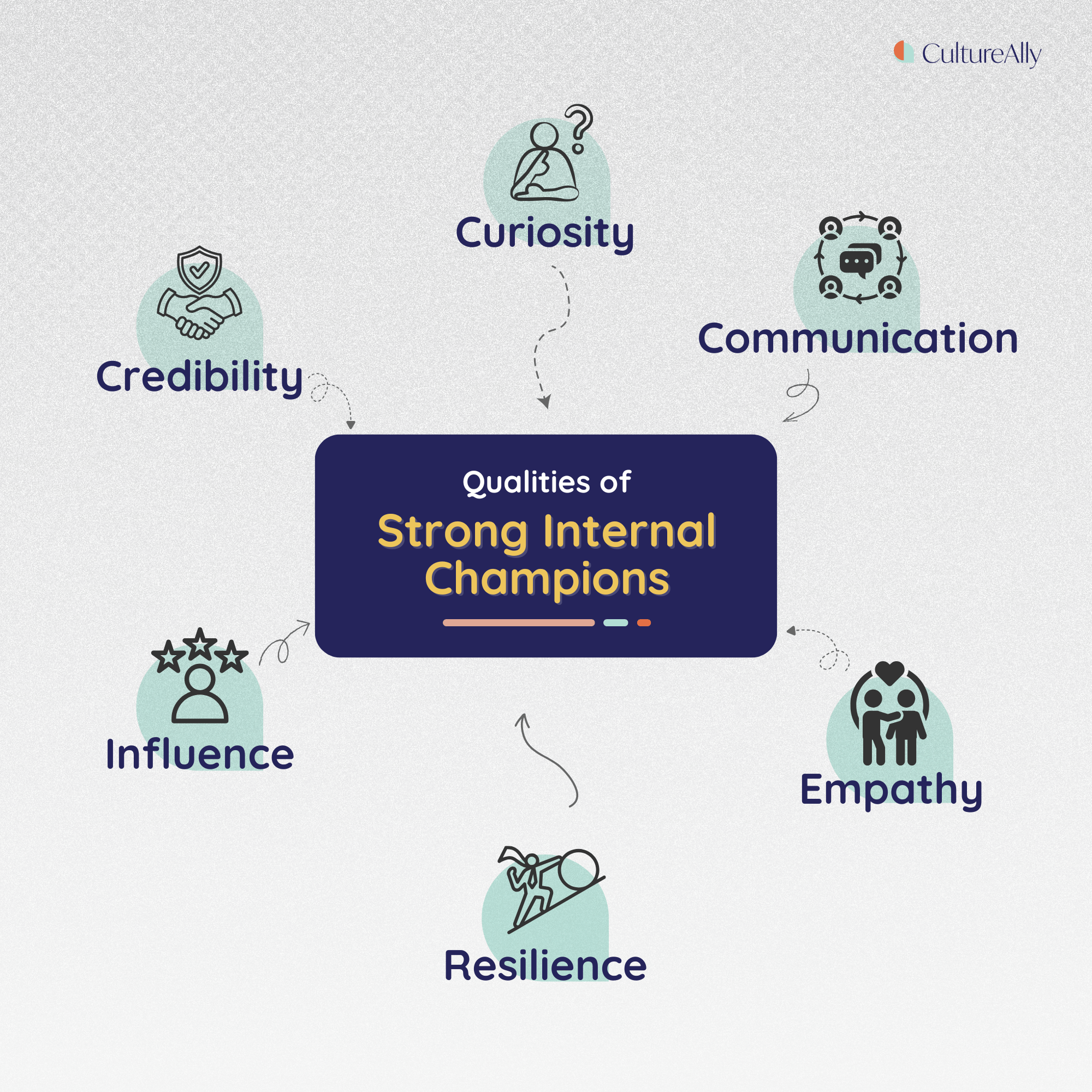
These qualities matter even more in Train the Trainer roles, since champions shape how well new skills and ideas spread across a team.
Curiosity and a Learning-Focused Mindset
Your champs will show interest in understanding people’s needs, questions, and workflows.
They stay open to new ideas instead of repeating what was taught, aiming to provide clarity to any and all potential questions.
Interpersonal and Communication Skills
Studies highlight that strong trainers communicate clearly, build rapport, and navigate culture and personal dynamics with care.
Your champions will know the roles, informal and formal culture, and general rhythm and vision of your work.
Empathy and Emotional Intelligence
Your champs will pay attention to how people feel, and often understand better than leadership and executive teams how changes affect regular employees. This helps them deliver information, whether related to training, general advice, or a clarifying conversation, without triggering discomfort or creating added stress during change.
Research on “peer champions” in workplace transformations found passion, responsibility, positive attitude, and empathy as central traits.
Reliability
Champions will be there for your team members and their commitments.
Willingness to Learn, Adapt, and Grow
As organizations evolve, their champions must do so as well. A part of their role includes staying flexible and open to refining their approach rather than sticking rigidly to one method.
Adaptive peer leaders and champions can support teams more effectively, regardless of their tenure at work.
Credibility and Trust With Their Team
Because champions are “one of us”, their teammates feel more comfortable asking hard questions or being honest about sources of discomfort, whether that is an organizational change or a structural one.
This credibility and trust helps make champions remain accessible to their teams for further discussions and dialogue.
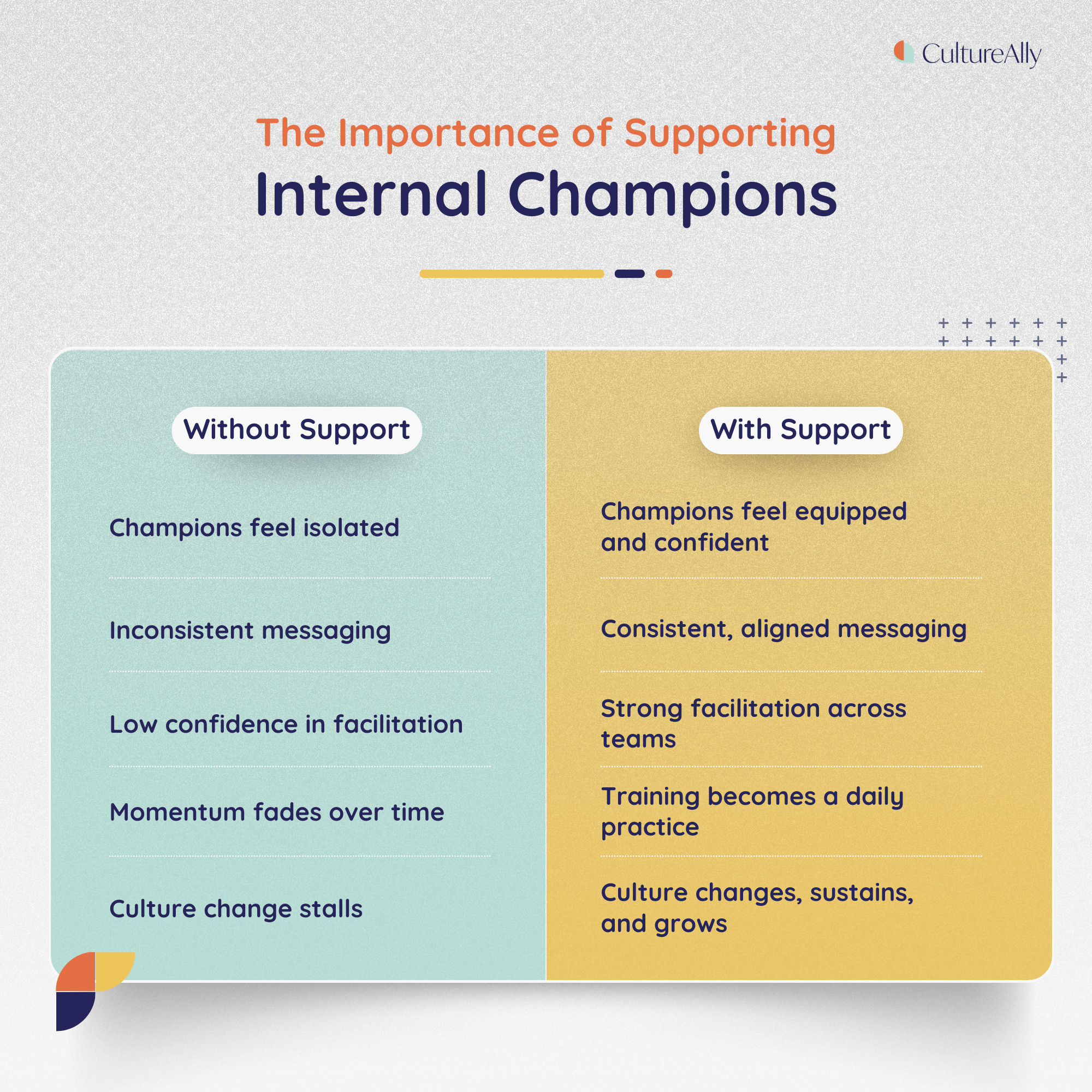
Sustaining Internal Champions
Sustaining champions is also what keeps a Train the Trainer model running smoothly over the long term.
Supporting your internal champions - and therefore your trainers - isn’t as complicated as it might seem on the surface. By starting with small, consistent actions you can help create the conditions that make your champs feel confident and connected in their role. Here are a few ways to start:
Provide Ongoing Learning
Like their peers, trainers and champions will benefit from mini “refresher” training to support their learning and their role. This could be anything from pre-recorded training videos or practice sessions with external trainers.
Offer Leadership Support
Being recognized for their hard work by leaders helps internal champions feel valued. This can be anything from acknowledging the value of their role during a meeting or asking for their input on decisions that will directly impact the employees that internal champions support.
Create a Network of Trainers and Champions
The role of internal champions and trainers can be a lonely, even pressure-inducing one. By creating a space for your trainers to share ideas and talk through challenges, they will create connections that help make them feel like a community, and reduce the pressure of carrying the important work they do alone.
Support with Accessible, Ready-to-Use Tools
Simple, accessible resources reduce stress. Slides, scripts, talking points, checklists, and short guides help champions lead conversations without feeling overwhelmed. Tools like this can help make their work more manageable and realistic, especially with a busy schedule.
Make Room for Their Role and Prevent Burnout
This one is important. Protect your trainers’ time so they can do the work that makes their role valuable. That means preparing discussions and training, talking with peers, or leading meetings, and all of those are intense, time-consuming tasks. By giving trainers space you acknowledge the importance of their work, and help support them without sacrificing their stability or causing burnout.
Clear, Consistent Feedback
Your champions are going to be the first people to notice what their teammates need, especially when it comes to training. Give them time to listen to feedback from colleagues about what is needed, what is working, and what needs additional clarity and support. Maybe that means your champs learn that team members want more training on mitigating biases, or maybe they are seeking support for their role as frontline workers.
Either way, that kind of feedback gives decision-makers the information they need to seek out effective, necessary training.
The Bigger Picture: What Supported Champions Create
When champions receive steady support, the results reach far beyond the training room. Teams start to speak the same language, even during stressful situations. People feel comfortable raising questions because they know someone nearby can guide them. Leaders see more honest conversations and clearer feedback.
Training also becomes less of an event and more of a habit. Instead of waiting for the next session to address issues, teams integrate learning into day-to-day rhythms. This leads to stronger relationships, smoother conflict conversations, and more confidence during moments of uncertainty. Over time, these small changes build real cultural strength.
Supported champions help organizations stay adaptable through shifts, turnover, and new priorities. Their presence brings stability and clarity during times when people need it most.
Final Thoughts: Learning is Built From Within
When champions get steady support in their training efforts, the result reaches far beyond the classroom. Teams feel more comfortable raising questions when they know they have someone to guide them. They also handle stress more easily and provide clearer, more honest feedback.
With steady support, champions guide others with confidence and care. They help organizations grow in a way that feels human, steady, and grounded. When teams build this kind of internal strength, culture change becomes something that is lived, not just learned. Train the Trainer works because it taps into the knowledge, trust, and credibility that already exist inside your teams, turning learning into something people can rely on every day.
Frequently Asked Questions
-
Train the Trainer models are designed to build internal capacity by giving selected team members the tools, confidence, and framework they need to guide their peers. Instead of relying on external trainers for every session, organizations grow long-term skills in-house, which strengthens consistency and sustainability.
-
Internal champions gain influence through trust and credibility rather than job title. They understand the day-to-day realities of their peers, which makes their guidance feel grounded and relatable. While managers and HR teams play essential roles, internal champions often bridge the space between formal leadership and everyday team culture.
-
If you’re exploring what Train the Trainer could look like in your organization, CultureAlly offers a structured, supportive program designed to help teams build confident internal facilitators. We provide practical tools, guidance, and coaching to help your champions succeed in ways that feel natural and sustainable for your workplace.
If you’re curious about how this could work for your team, we’d be happy to walk you through the options.