7 Workplace Culture Questions Leaders Should be Asking in 2026
The overall culture of your organization isn’t built by values on a slide deck, policy changes, or statements without follow-through. It’s built in everyday decisions, tough moments, and the questions leaders choose to ask or choose to avoid.
As we head into 2026, the organizations that thrive won’t be the loudest; they’ll be the most curious.
Skip ahead:
1. Am I modeling the behaviors I expect from my team, especially under pressure?
2. Where might there be a disconnect between leadership intent and employee experience?
3. Do people feel equipped to have critical, but respectful, conversations? Or do they avoid them?
4. When conflict shows up, do we escalate or start playing the blame game?
6. How are we addressing ongoing uncertainty, not just major disruptions?
7. How do we define and practice respect in everyday work, not just in policy?
2025: A Year in Review
Over the past year, conversations about workplace culture and leadership expectations have shifted in noticeable ways:
In 2025, political polarization and public scrutiny made certain topics harder to discuss openly, leading many organizations to pause, reframe, or quietly step back from culture-related initiatives. It often reflected genuine uncertainty about what language to use or whether to say anything at all.
According to the Edelman Trust Barometer, which gives data about how the public perceives institutions, businesses, and more, leaders are increasingly expected to balance competing expectations from employees, customers, and the public. This is due to a decrease in trust and an increase in grievances toward businesses and public bodies.
As questions around work culture become more difficult, some organizations have avoided them altogether.
Meanwhile, others worked in smaller, less visible ways, such as focusing on team dynamics rather than larger-scale public commitments.
What hasn’t changed, however, is how deeply workplace culture shapes the employee experience: people still want to feel respected at work, they want to feel expectations are fair, whether growth is accessible, and whether speaking up is truly safe where they are.
Even as we go into 2026 it is clear that, should these needs go unmet, the impact can lead to total disengagement, burnout, turnover, and general conflict.
As you look ahead to 2026, there are many opportunities to reset the conversations around inclusive workplaces, culture, team dynamics, and more. So prepare for the year ahead, and get ready for an even wilder ride when it comes to inclusivity. Because in 2026, workplace culture won’t be shaped by what leaders say they value, but by the questions they consistently ask and the answers they take seriously.
1. Am I modeling the behaviors I expect from my team, especially under pressure?
In uncertain times, people turn to leadership more than messaging. How leaders handle stress, disagreements, mistakes, and ambiguity lays the groundwork for how the entire organization will work together.
If you are in a leadership role, ask yourself about the aspects of your role that matter most. For example:
Am I comfortable with how I handle pressure, feedback, and accountability?
The answer will help guide you toward where you need to be next year and what kinds of skills you want to develop and work towards in 2026. It’s important to remember that if skills you expect from employees aren’t happening from the top down, trust crumbles.

As a first step, aim to set the tone for the whole team through Teamwork and Team Building Training.
2. Where might there be a disconnect between leadership intent and employee experience?
Research shows that there is a growing disconnect between leadership and employees. This is for a number of reasons, but some of the most common ones include a need for better pay, limited career opportunities and progression pathways, and stress.
Truthfully, many leaders and human resource professionals often think they are displaying enough transparency, support, and equity amongst their employees. However, employees may experience this differently; they may feel confused, excluded, or overall instability, all of which can cause your best people to quit if left unaddressed.
We predict that this gap is going to be one of the most significant cultural challenges as we head into 2026, and closing it requires listening without defensiveness and being willing to sit with uncomfortable feedback.

One of the first ways to close that divide is to start from the top down.
Incorporating cultural competence training for managers, which can help executive and management teams recognize cultural influences, build psychological safety, and model the curiosity and accountability they want to see throughout their team.
3. Do people feel equipped to have critical, but respectful, conversations? Or do they avoid them?
Handling difficult conversations in the workplace has been a topic of interest for over a decade (see this Harvard Business Review article from 2015), but the way we navigate them continues to change. But what is a difficult or critical conversation?
Well, these conversations range from performance improvement to conflict resolution and everything in between. Think of any conversation you wouldn’t necessarily choose to have if we lived in a perfect world and you can likely think of quite a few discussions you want to avoid. Forever, if possible.
Fear of conflict and confrontation, shyness, and emotional reactivity often determine how equipped leaders feel to have these critical conversations and if they are effective. On top of that, it can be difficult to admit when you, as a leader or executive or even an individual in HR, feels unequipped for difficult topics.
You have to think about it like riding a bike: we aren’t born able to do it, but the more practice you get and the more you try (even when you inevitably fall) the better you get.

Jumpstart your critical conversation training today.
4. When conflict shows up, do we escalate or start playing the blame game?
Mistakes and missteps are inevitable, especially in the high-pressure, rapidly-shifting environments we tend to encounter.
Employees always remember how leaders respond to conflict and potential problems. That means if someone reacts in a way that is out of proportion or says something that doesn’t land right emotionally, they will remember. And that impact often trickles down across teams and the organization as a whole.
Remember, if employees can’t describe what respect looks like in practice, it is likely it isn’t being applied consistently across teams.
In the past year, we have seen firsthand how important it is for executives to model good behaviour for their staff. Not only that, but even when leaders make big mistakes, when they make an effort to change that is not only honest and consistent, employees can indeed forgive and move on, reinforcing a more positive opinion of their role.

That’s why 1-on-1 executive coaching is a crucial step towards mending relationships between leaders and employees. And, more often than not, those 1-on-1 sessions can tell you where else your team can improve, ultimately helping to lead change from the top down.
To learn more, check out our blog all about executive coaching.
5. Who has visibility and opportunity here, and who might be disadvantaged by how work is structured?
In the past year, a growing number of companies have mandated that their employees return to the office. Often, leadership cites this as a way to rebuild culture, professional relationships, and engagement. And while that can make a lot of sense, as there is certainly a difference between having discussions in person versus a video call, strictly enforcing these policies generally doesn’t seem to help. In fact, employee engagement remains low.
One of the specific ways this has affected employees is due to the accessibility that comes with remote or hybrid work. Employees facing mental or physical health challenges are often disproportionately affected by sudden RTO policies. In that respect, leaders need to examine whether the enforcement of return-to-office policies unintentionally slows growth for some employees while potentially improving the experience of others, and what can be done to embed fairness regardless of where or how work happens.
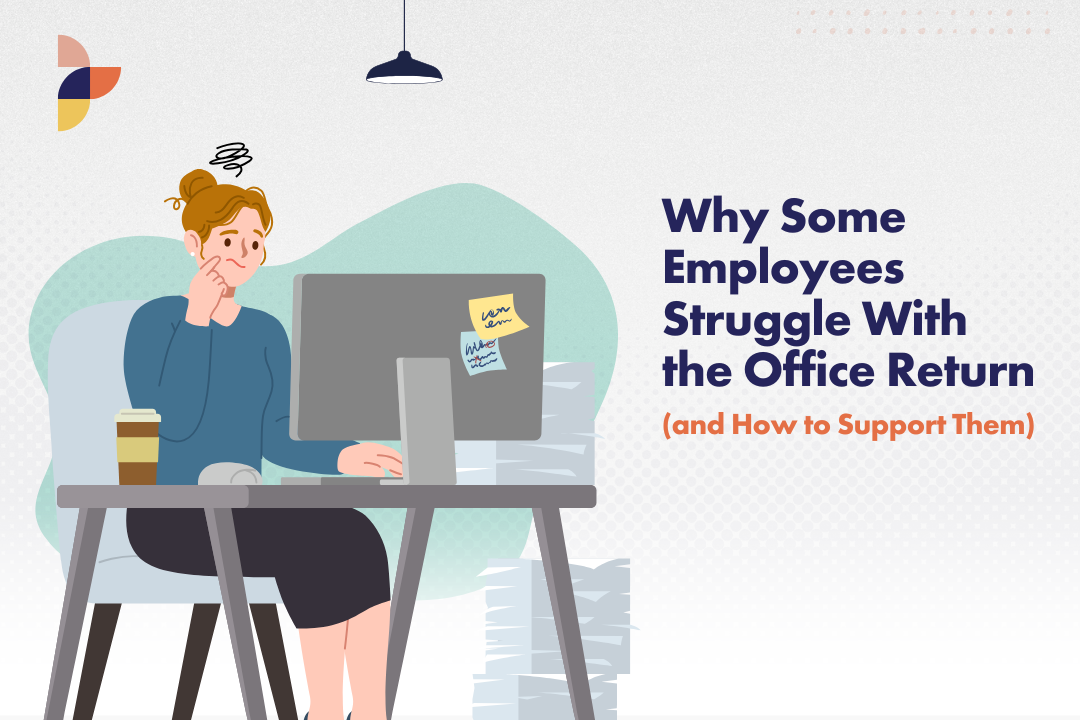
To start learning more, check out our blog all about RTO policies: Why Some Employees Struggle With the Office Return (and How to Support Them).
6. How are we addressing ongoing uncertainty, not just major disruptions?
For many employees, it’s not one big change that causes burnout; it’s the constant sense of instability. This can cause further issues, from increased conflict to outright leaving their position.
Rolling restructures, shifting priorities, and quietly cutting costs takes their toll, and often leaders may wrongly perceive these as going unnoticed. Directly acknowledging the shifting realities and priorities of your workplace not only brings these changes into the open, but also supports people through sustained periods of uncertainty. This is where leadership communication skills and conflict de-escalation strategies become especially critical.

Of course, this doesn’t mean these conversations won’t be difficult or prevent conflict.
However, you can prepare by incorporating conflict de-escalation training, preparing both leaders and employees to navigate dialogues and fears about changes with respect.
7. How do we define and practice respect in everyday work, not just in policy?
Respect is not just an abstract value or concept, it’s a core part of a healthy workplace culture.
As much as it may feel impossible to measure, how we show respect is everywhere. For an easy example, take notice of the dynamics of a meeting:
Who is being interrupted?
Whose ideas are being acknowledged and whose ideas are being ignored?
Is anyone expected to adjust their schedule or workload without being asked?
Other places respect clearly appears in how deadlines are set out, if workloads are realistic, and whether flexibility is extended equitably or only to certain people or roles.
Respect also lives in communication, showing up in your tone, responsiveness, and assumptions about questions or concerns. It’s present when leaders explain decisions rather than simply announce them, when feedback leads to a conversation or defensiveness, and when people are spoken to as capable adults rather than managed through fear.
Finally, respect is deeply tied to decision-making. Employees notice whether their input is genuinely considered, whether standards are applied consistently, and whether accountability exists at all levels of the organization or is reserved for those at the top.
When respect is practiced consistently, people feel seen, trusted, and valued. When it’s absent or uneven, no amount of policy language can compensate. Leaders who take this question seriously move beyond asking whether respect matters and start examining how it’s actually experienced day to day.

Sensitivity training explores how to practice respectful conversations, build trust, create strategies for addressing uncomfortable behaviors, and techniques and tools for minimizing bias and reframing conflict.
Final Thoughts: Asking Better Questions Is the Work
As 2026 approaches, workplace culture isn’t going to be shaped by perfect language, bold statements, or one-time initiatives. It will be shaped by what leaders choose to notice, question, and respond to, especially when it’s uncomfortable.
The organizations that build trust and resilience in the year ahead won’t be the ones that avoided hard conversations. They’ll be the ones that stayed curious, reflected honestly, and invested in the skills needed to navigate change with respect and accountability.
It’s an ongoing practice, and you certainly don’t need all the answers right away. But the willingness to keep asking, to maintain empathy, to stay curious, and to adapt when needed signals something powerful: that growth is valued over stagnation, and care over indifference.
Workplace culture isn’t about saying the right things or performing the right actions. It’s all about consistently choosing understanding even when it’s hard.
All the best in 2026. Let’s make it a year worth remembering.
Frequently Asked Questions
-
Anyone with influence over how work gets done. That includes executives, managers, HR professionals, team leads, and even individual contributors who want to better understand the culture they’re part of.
-
That’s common, especially in times of uncertainty. Starting small matters. Even reflecting on one or two of these questions within a team can create momentum.
-
These questions are a starting point. They highlight where skill-building, clearer communication, or stronger accountability may be needed. From there, organizations often invest in leadership development, communication training, conflict navigation skills, or team-based conversations to support meaningful change.
-
That’s not a sign of failure, but a sign of honesty. Discomfort can be productive when it’s handled with care and structure. Having the right tools and support in place helps teams move through tension without causing harm or disengagement.
-
Absolutely relevant for both. In fact, work culture shows up most clearly in smaller environments, where behaviors are highly visible. Overall, however, the size of the organization matters far less than the consistency of leadership behavior and follow-through.
-
Start by choosing one question that feels most pressing right now. Use it as a reflection point in leadership discussions or team meetings. From there, identify where skill-building, clarity, or support would make the biggest difference.